Teaching high school for the first time was a meaningful learning experience in many ways. In the paragraphs that follow, I reflect on some areas that I found particularly conflicting or in need of deeper consideration. My aim here is to thoughtfully examine what worked well and what I might adjust to better support both student learning and my own sustainability as an educator.
Technology in the Classroom
As part of my teaching philosophy, I aimed to integrate technology into my lessons as much as possible. I incorporated tools such as Mentimeter, Kahoot!, Quizizz, Padlet, IXL, and other digital platforms. One highlight was a science lesson on prompt engineering using ChatGPT, where students explored how asking better, more specific questions leads to more accurate and insightful answers. I also purchased a virtual reality headset for students to visualize human biology (see Figure 1, below).

While students were engaged by the use of technology, managing screens and preventing distractions was a challenge. Some used their devices responsibly to take notes or access learning tools, while others were easily sidetracked by games or social media. I’ve realized that the speed, engagement, and environmental benefits of using tech must be balanced with the potential for distraction. Next year, I plan to return to using notebooks for note-taking and reserve technology only for intentional, structured activities.
Homework
One internal conflict I faced was the use of homework. While I needed extra time for students to practice skills—especially in math—I personally believe students should also have time after school to connect with friends and family, explore their interests, and rest. I found checking homework completion took away valuable class time, often with minimal benefit.
Next year, I’d like to incorporate more in-class “warm-up” questions to reinforce prior learning, allowing students to practice without relying heavily on out-of-class assignments.
Contact with Parents
Maintaining regular communication with parents can be time-consuming. A single email often turns into a long thread, and meetings—virtual or in person—require coordination outside school hours. While platforms like Schoology and PowerSchool provide parents with access to grades, assignments, and announcements, direct communication is still valuable—particularly when concerns arise.
Moving forward, I plan to reach out to parents earlier in the semester to establish rapport and consider using an app with built-in communication features to streamline updates and messaging.
Labs
In science, I prioritized hands-on learning through labs to help students engage more deeply with the content. I truly believe lab work is one of the most exciting and effective ways to learn science. However, I quickly realized how much time and energy labs require—from sourcing materials and preparing instructions, to managing behaviour and marking dozens of detailed reports.
Next year, I plan to scale back the number of full written lab reports. Instead, I will teach lab report writing in smaller chunks (e.g., having students complete only one section per lab), and perhaps use multiple-choice samples to help students identify strong report sections. I’d also like to keep one full APA-style lab report tied to the science fair, which allows students to synthesize everything they’ve learned in one final product.
What Went Well & What Could Be Improved
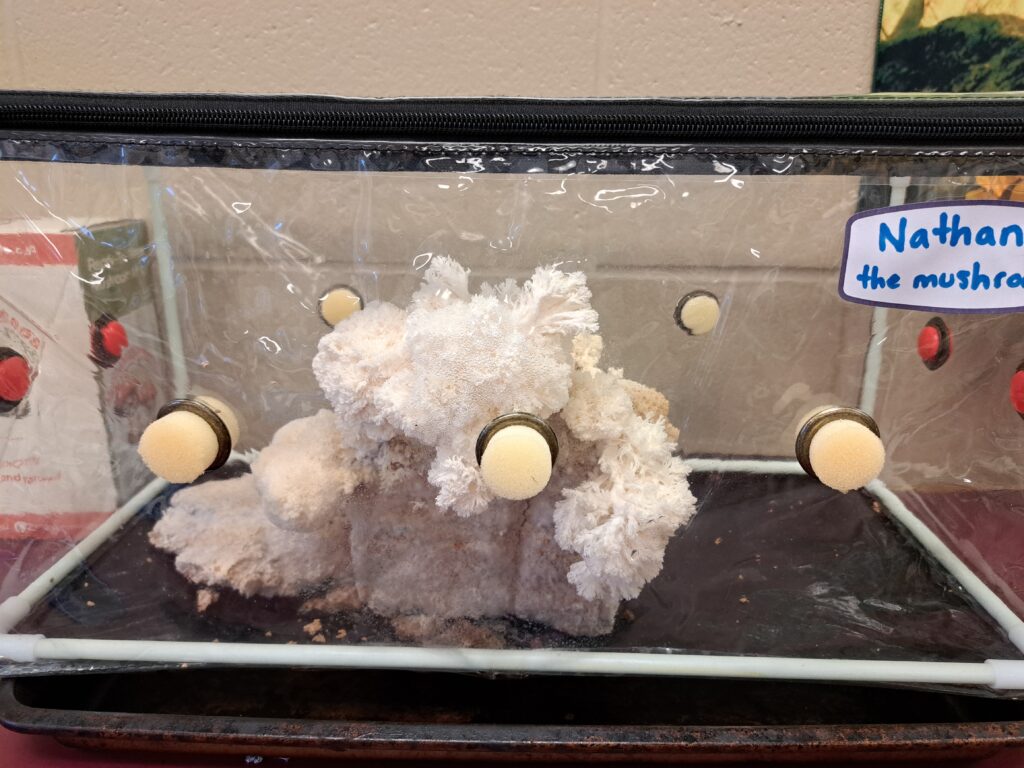
I’m proud of the effort I put into making science engaging. Students especially loved growing a classroom mushroom as our “class pet” (see Figure 2, below), solving daily riddles, using mini whiteboards, and participating in learning games. These activities helped build a positive classroom atmosphere and made the learning process enjoyable.
For next year, I want to refine how I assess students. My goal is to create assessments that are clear, meaningful, and efficient—both for students and myself. I also want to incorporate more opportunities for student self-reflection by including an “assessment as learning” section on all major evaluations. This will give students a chance to reflect on their learning process and advocate for their needs. A reflection section on a test (see Figure 3, below) provides valuable feedback on what students enjoyed and remembered, which helps guide my future instruction.
