Organized by grade: Grade 4/5, Grade 10
Grade 4/5 Science
LIGHT UNDER THE SEA
Date: April 2023
Curriculum Connection: Light (C2)
- C2.1 identify a variety of natural and artificial light sources
- C2.2 distinguish between objects and living things that emit their own light and those that reflect light from other sources
- C2.3 describe properties of light, including that light travels in a straight path and that light can be absorbed, reflected, and refracted
- C2.6 describe how different objects and materials interact with light and sound energy
- C2.7 distinguish between sources of light that emit both light and heat and those that emit light but little heat
- C2.8 identify sensory organs and devices that make use of the properties of light and sound
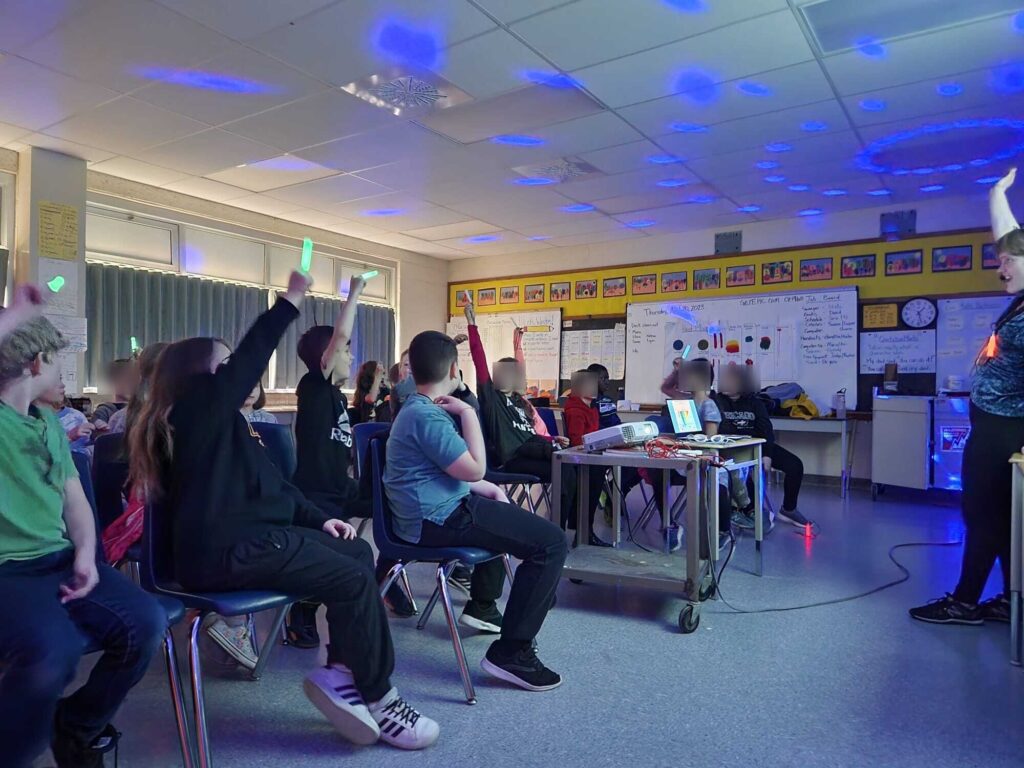
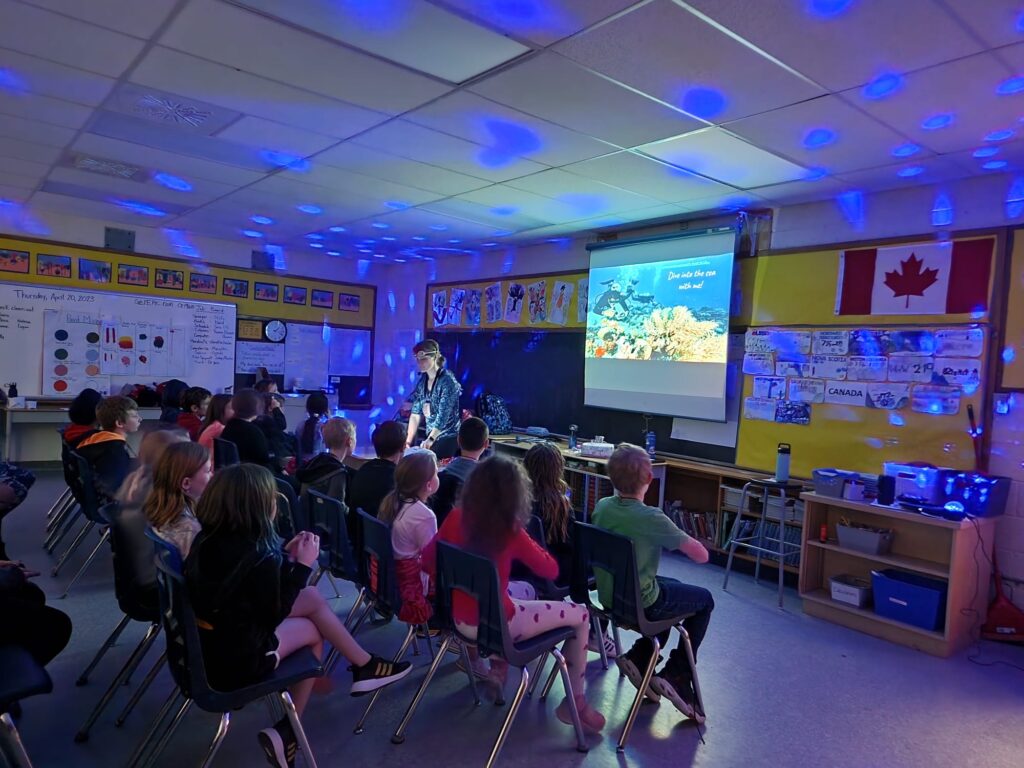
Description: For this immersive science lesson, the classroom was transformed into a glowing underwater world. Students “dived” into the ocean’s three layers to explore how light behaves in the deep sea. We investigated three forms of light production:
- Bioluminescence (organisms like anglerfish that create light),
- Chemiluminescence (demonstrated with glow sticks), and
- Triboluminescence (explored by crushing mint candies in the dark!).
Through virtual tours, videos, drama games, and hands-on experiments, students engaged with light phenomena in both a scientific and creative way. This cross-curricular lesson blended inquiry, sensory exploration, and dramatic arts to ignite curiosity and deepen understanding of natural light in unexpected places.
Pictures:
Powerpoint download:
Grade 10 Science
PAINTING WITH ALGAE
Date: 2024-2025
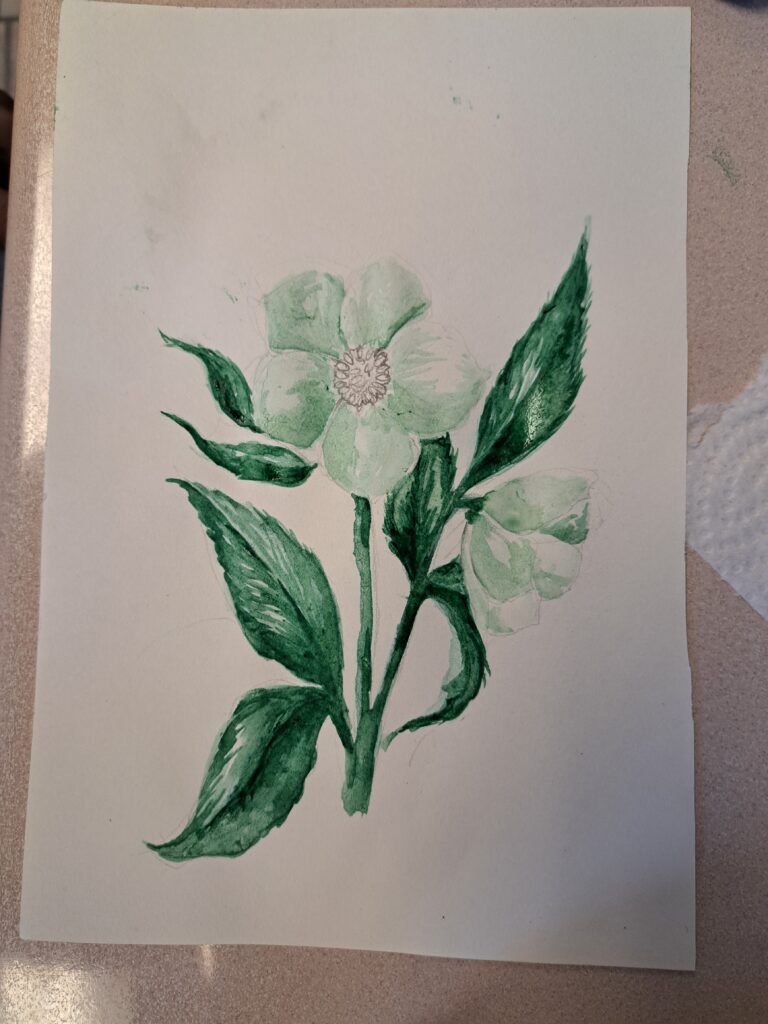
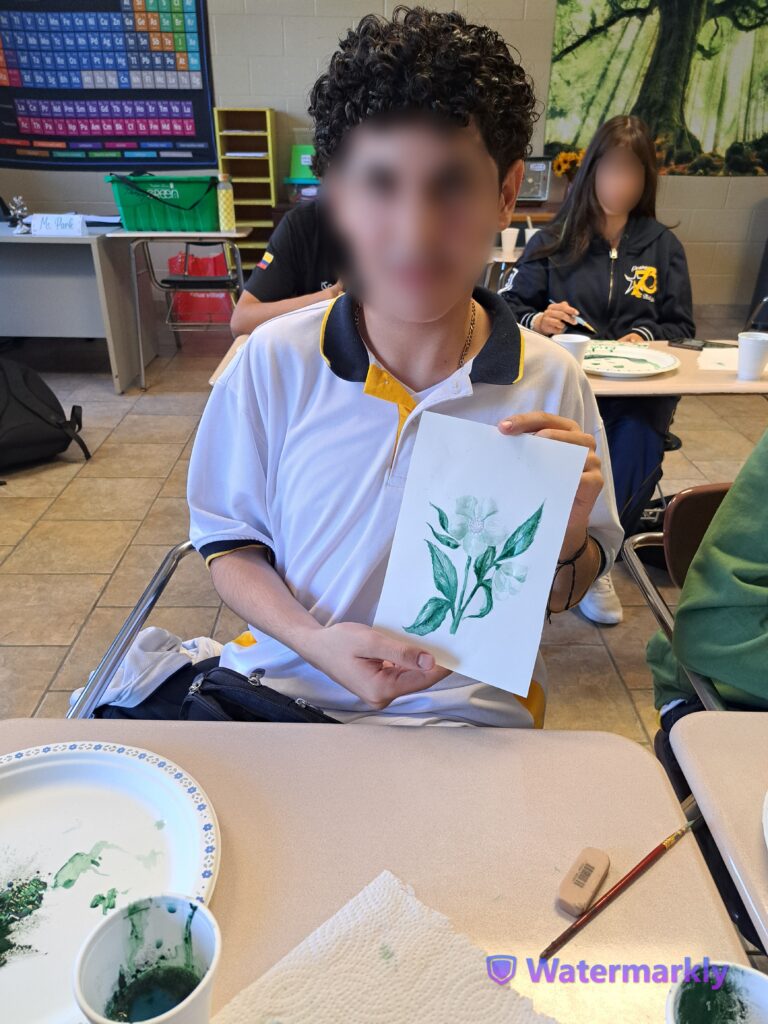
Description: To combine scientific inquiry with creative expression, students participated in a cross-curricular lesson using algae-based paints to explore concepts in plant biology. Using Spirulina powder, calcium carbonate, and thick paper, students mixed their own green pigment and painted botanical-themed artwork that reflected their learning. As they painted, students discussed the biology of algae: how it photosynthesizes, its ecological importance, and its classification as a simple, plant-like organism. The hands-on, sensory nature of this activity helped bring the microscopic plant world to life — literally and artistically.
Curriculum Connection (SNC2D): Biology: Tissues, Organs, and Systems of Living Things
- B3.1 – Describe the characteristics of living things and identify major groups of organisms, including plants, based on their cellular structure.
- B3.3 – Describe the structure and function of cells, including photosynthetic cells.
- B3.5 – Explain the importance of photosynthesis in plants, algae, and other organisms.
- Cross-Curricular Link – The Arts (Visual Arts): Students explored sustainable materials and used the creative process to produce meaningful artwork connected to science themes.
DOUBLE-SLIT EXPERIMENT (WAVE PARTICLE DUALITY OF LIGHT)
Date: 2024-2025
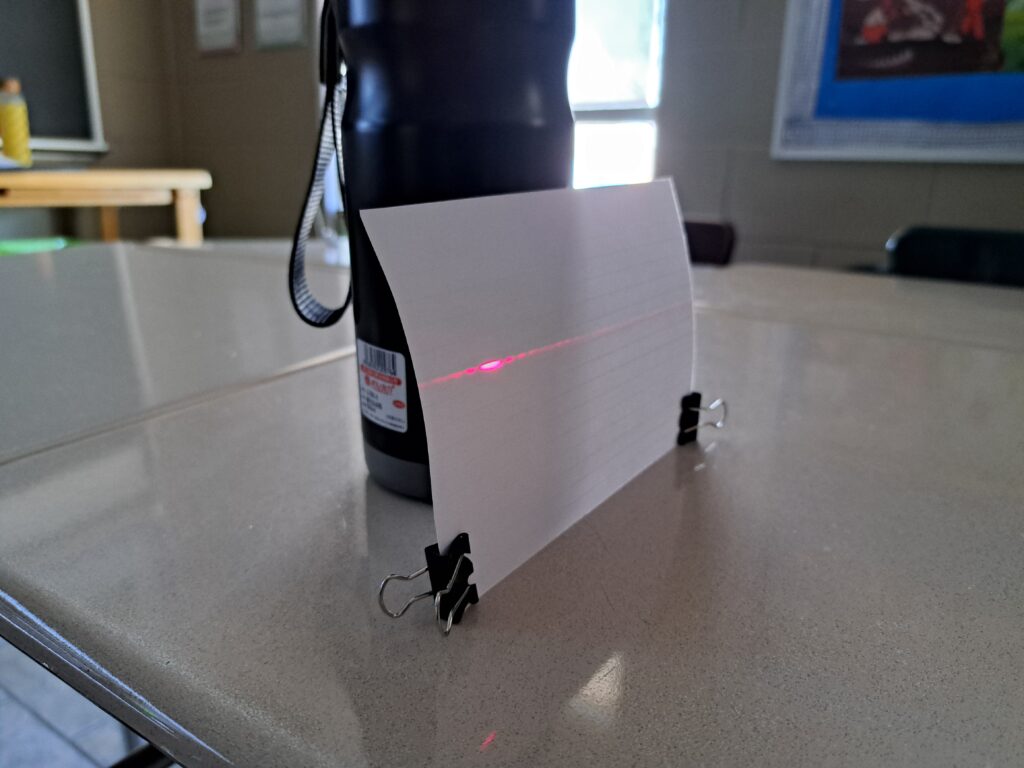
Description: Students recreated a simple version of the double-slit experiment using a lice comb, laser pointer, electrical tape, and a cue card. By carefully aligning the setup, students observed an interference pattern projected on the paper. The setup visually demonstrated that light behaves as a wave, interfering with itself, even though it also behaves like a particle (photon). This sparked inquiry into the nature of light and quantum physics principles.
Curriculum Connection (SNC2D): Physics: Light and Geometric Optics
- D1.2 assess the impact of technologies that use the properties of light, with reference to both intended benefits and unintended negative consequences
- D2.2 investigate, through inquiry, the laws of reflection and refraction, using both qualitative and quantitative methods
- D2.6 use scientific inquiry skills to investigate the wave model of light, using data and analysis to draw conclusions (e.g., investigate interference or diffraction patterns)
REFRACTION AND MAKING RAINBOWS WITH PRISMS
Date: 2024-2025
Description: Students used glass prisms to bend white light and produce visible rainbows. They investigated how different wavelengths of light refract at different angles, leading to color separation. Students sketched what they saw and related it to real-world phenomena such as rainbows and prisms in glasses and windows.
Curriculum Connection (SNC2D): Physics: Light and Geometric Optics
- D2.4 predict, and verify through inquiry, the refraction of light as it passes through different media (e.g., from air into water or glass)
- D2.5 describe how light behaves when it travels through a prism (e.g., dispersion into a spectrum)
BURNING LEAVES WITH MAGNIFYING GLASSES
Date: 2024-2025
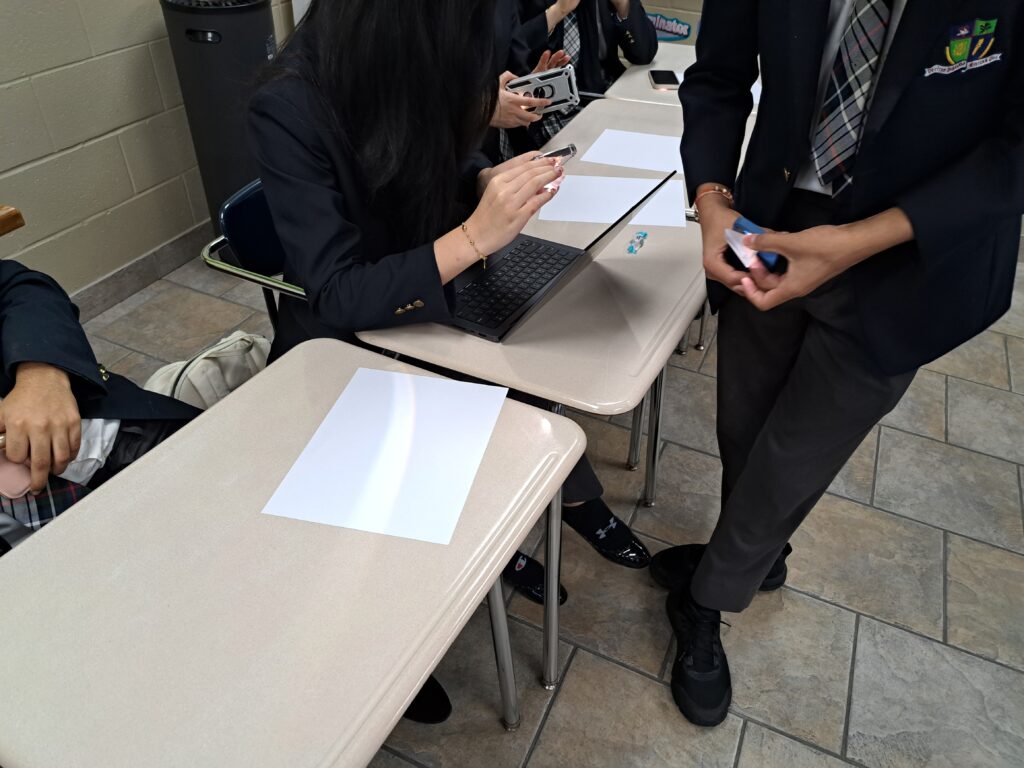
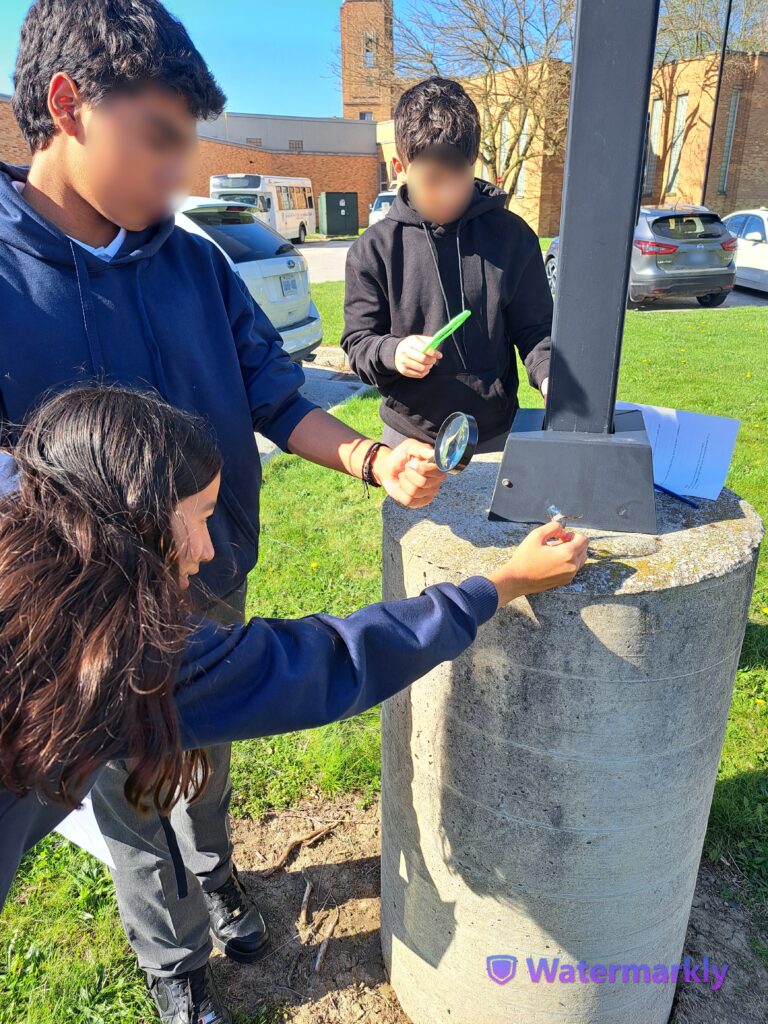
Description: In this outdoor inquiry lab, students explored the behavior of light through converging lenses using magnifying glasses and sunlight. They observed how parallel rays from the sun bend and converge at a focal point, creating a small, bright spot of concentrated light. Students sketched ray diagrams, measured the focal length, made predictions about lens positioning, and tested their predictions in real-time. Through guided questions, they discovered why and how magnifying glasses can focus light — and even burn objects — due to energy concentration at the focal point. This activity promoted hands-on learning, scientific reasoning, and real-world connections to lens applications, such as cameras, microscopes, and solar energy tools.
Curriculum Connection (SNC2D): Physics: Light and Geometric Optics
- E2.5 – Predict, using ray diagrams and algebraic equations, the position and characteristics of an image produced by a converging lens, and test their predictions through inquiry.
Picture:
LAVA LAMPS
Date: 2024-2025
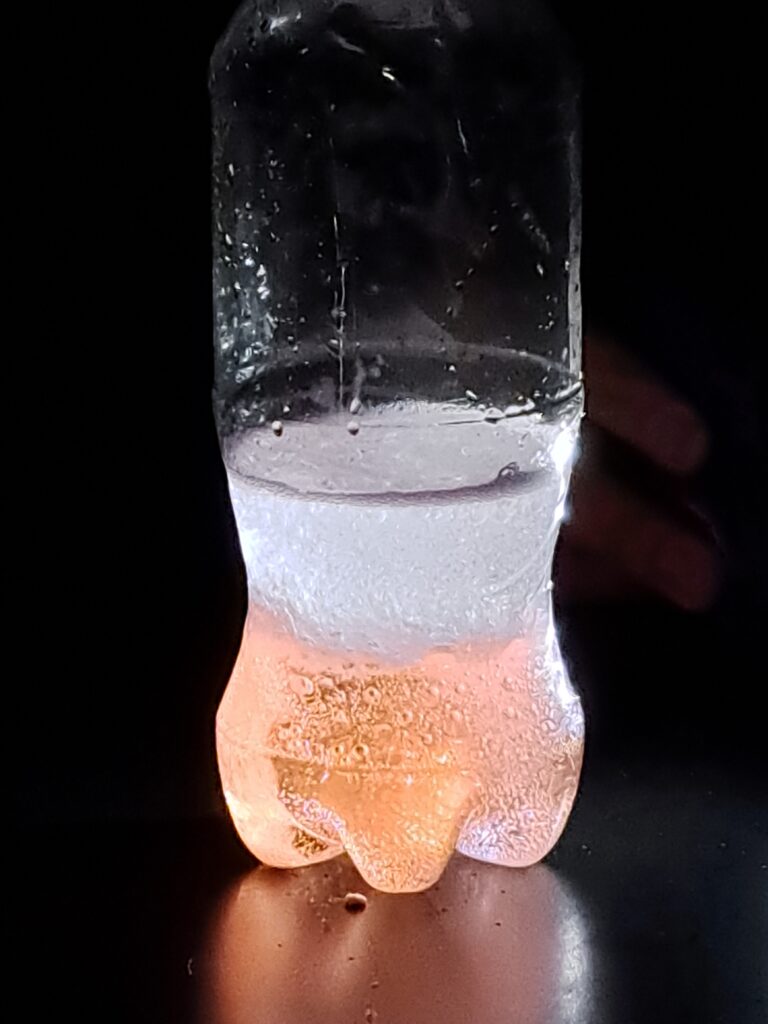
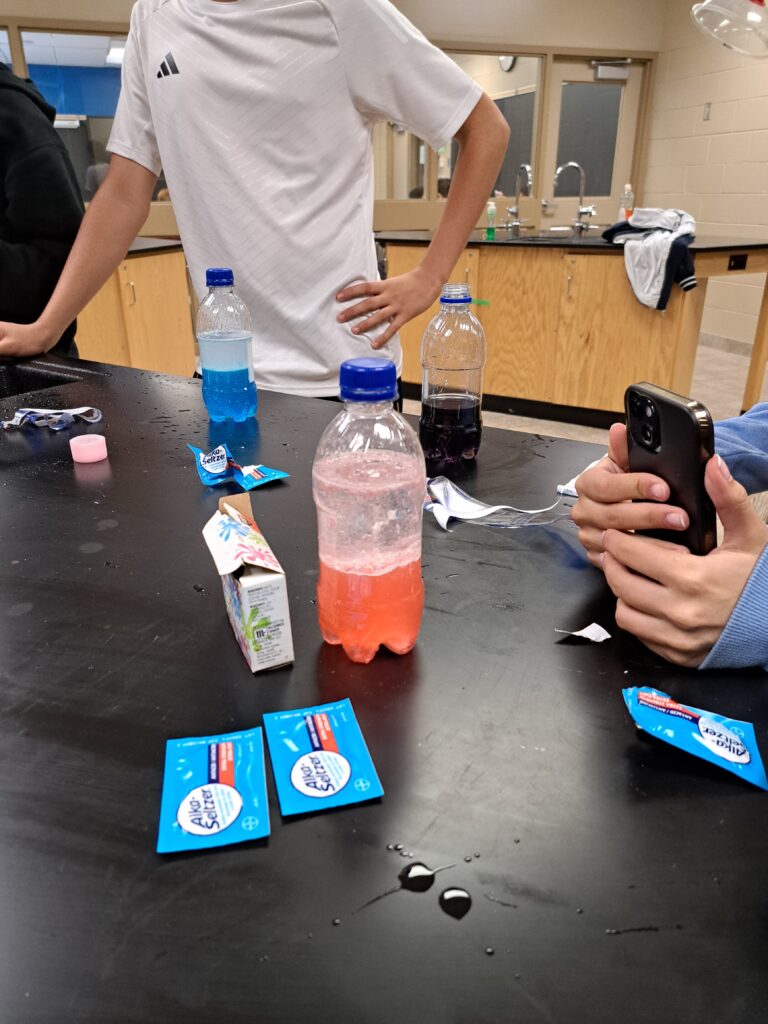
Description: In this colourful and engaging activity, students created homemade lava lamps using water, food colouring, baby oil, and Alka-Seltzer tablets. The oil and water naturally separated due to their different densities, and when the Alka-Seltzer was added, it reacted with the water to produce carbon dioxide gas. The gas formed bubbles that carried coloured water droplets upward through the oil, creating a lava lamp effect. Students observed both physical properties (like density and immiscibility) and chemical change (gas production from acid-base reaction). They were encouraged to make predictions, test variables (e.g., amount of tablet, type of oil), and explain the visible changes through scientific reasoning.
Curriculum Connection (SNC2D): Chemistry, Chemical Reactions
- C2.4: Investigate indicators of chemical change (e.g., gas formation, bubbling).
- C3.4: Explain how gas formation indicates a chemical reaction has occurred.
- C2.1/C2.3: Conduct experiments safely using scientific inquiry skills.
- Scientific Inquiry Skills: Predict outcomes, identify variables, analyze results, and communicate observations effectively.
BOTTLE ROCKETS
Date: 2024-2025
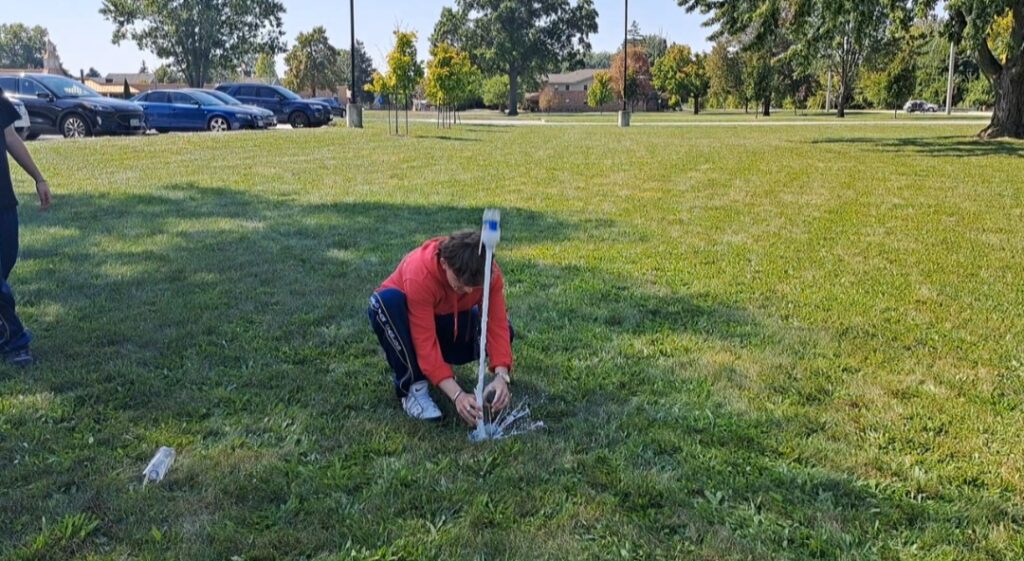
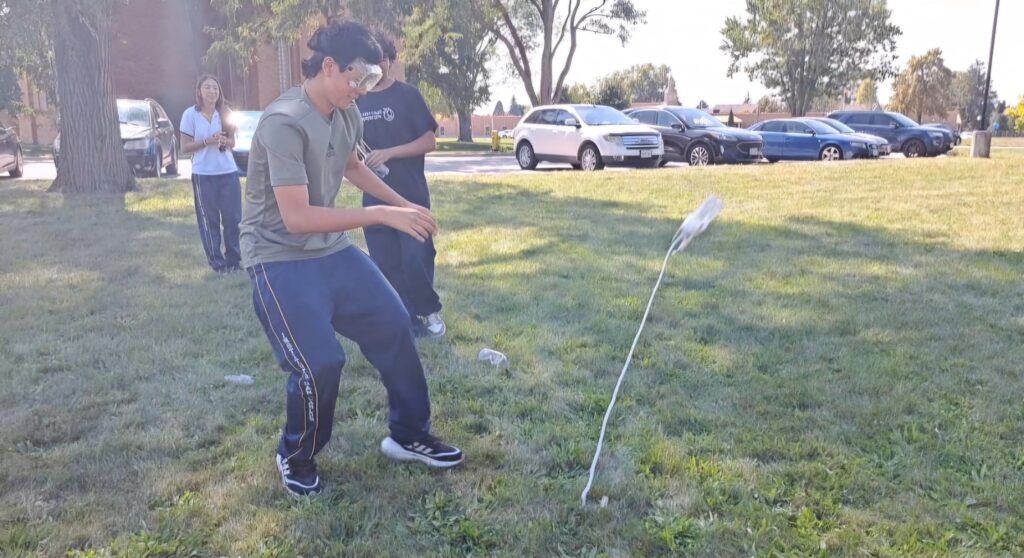
Description: In this dynamic outdoor lesson, students launched bottle rockets using a classic chemical reaction between vinegar (acetic acid) and baking soda (sodium bicarbonate). As the two substances reacted, they produced carbon dioxide gas, building up pressure inside the sealed bottle until it was forcefully released — launching the rocket into the air! Students predicted what would happen based on their understanding of chemical reactions and observed the rapid production of gas as evidence of a chemical change. They discussed the conversion of chemical energy into kinetic energy and recorded variables that could influence rocket performance, such as reactant ratios, temperature, and bottle shape. This high-energy activity gave students a memorable, hands-on experience with chemical change and gas production while fostering teamwork and scientific inquiry.
Curriculum Connection (SNC2D): Chemistry: Chemical Reactions
- C2.4: Use appropriate indicators to identify the presence of a chemical change.
- C2.5: Investigate simple chemical reactions involving acids and bases (e.g., baking soda and vinegar).
- C3.4: Identify evidence of chemical change (e.g., gas formation, temperature change, formation of a new substance).
- Scientific Inquiry Skills: Make predictions, conduct fair tests, observe chemical changes, analyze cause-effect relationships, and communicate findings effectively.
Pictures:
MODEL LUNGS
Date: 2024-2025
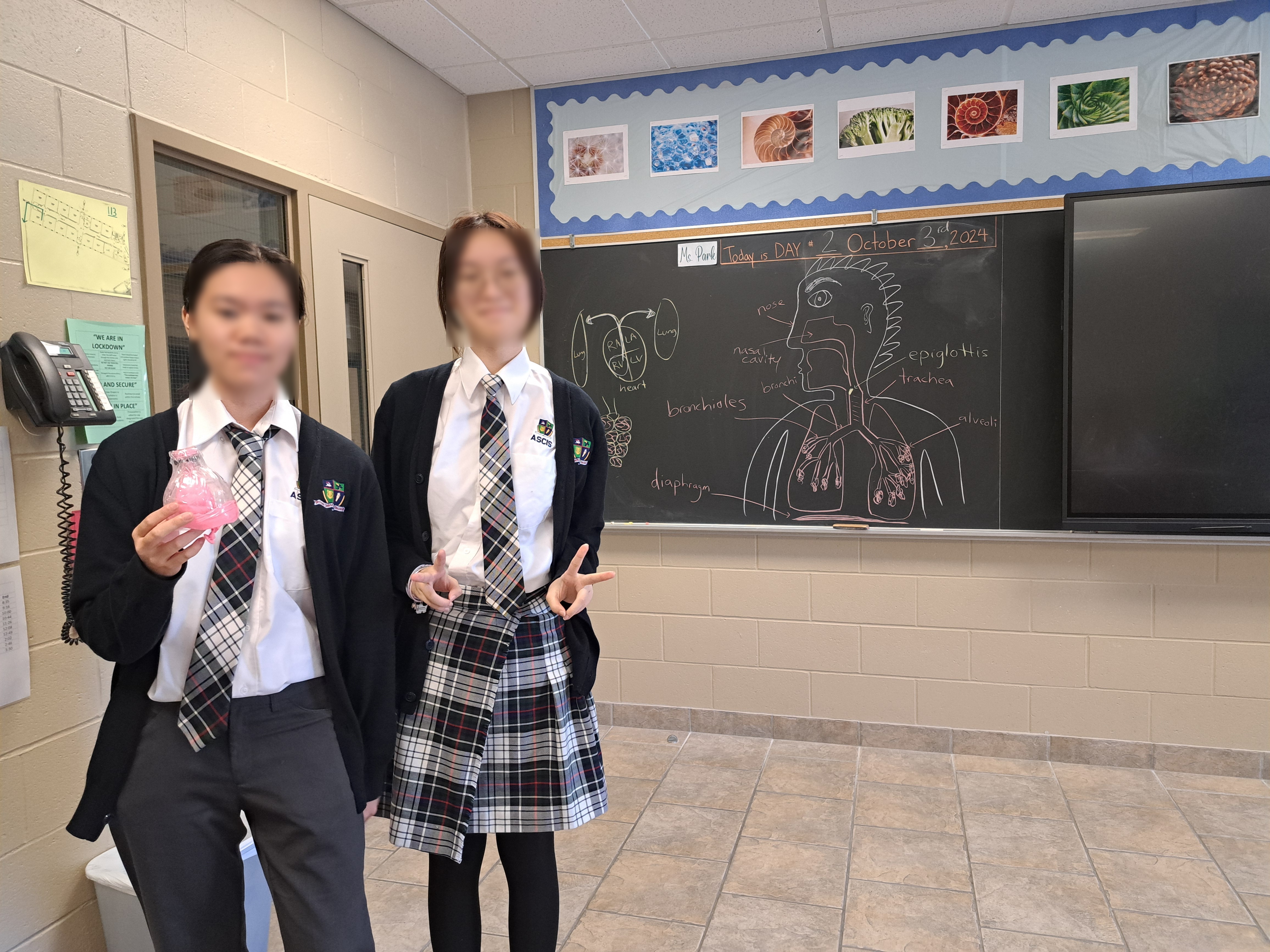
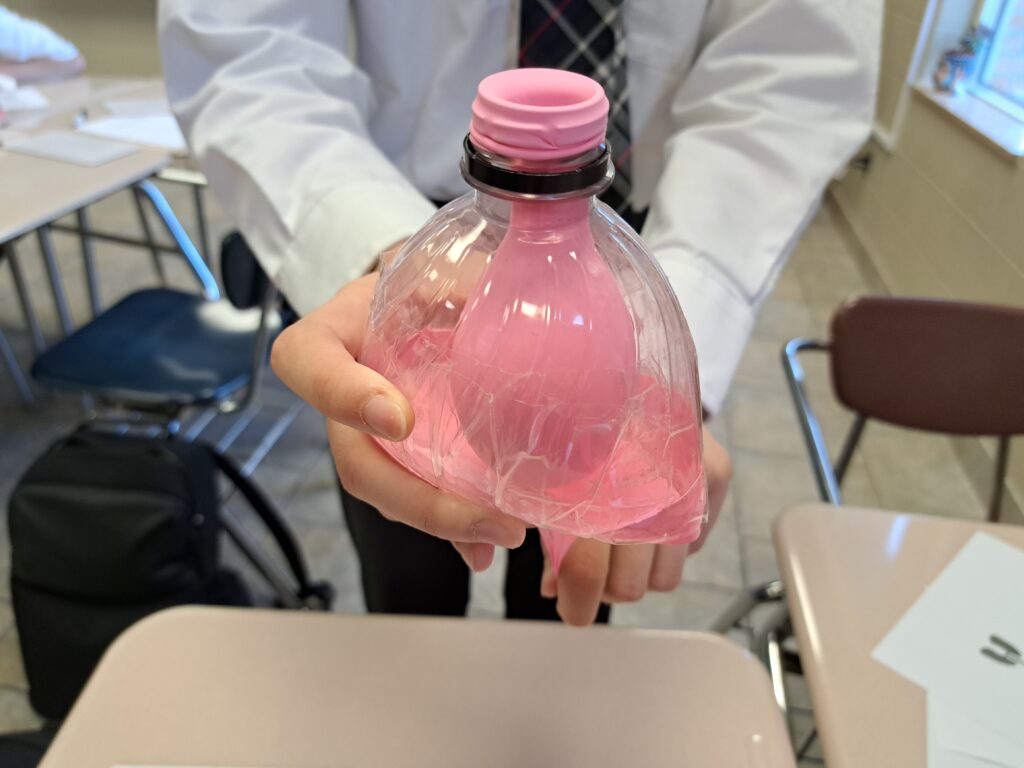
Description: In this hands-on lesson, students rotated through a series of stations featuring homemade lung models created from balloons and plastic bottles. Each model represented a different respiratory condition—such as cystic fibrosis, asthma, smoking-related damage, air pollution effects, or lung cancer—using simple yet effective visual and tactile modifications. Students were asked to observe how well each model “breathed” when the balloon diaphragm was pulled and to determine whether the model represented a healthy or diseased lung. They recorded their observations and made inferences about the physiological changes caused by each disorder, such as restricted airflow, excess mucus, or damaged lung tissue. This interactive activity encouraged scientific reasoning, group discussion, and critical thinking as students connected model mechanics to real-life biological systems and health impacts.
Curriculum Connection (SNC2D): Biology: Tissues, Organs, and Systems of Living Things
- B2.2: Investigate cell division and the impact of cellular malfunction on tissue and organ function.
- B3.1: Describe the structure and function of the respiratory system.
- B3.3: Explain the impact of lifestyle choices and environmental factors on human health, particularly related to the respiratory system.
- Scientific Inquiry Skills: Formulate hypotheses, conduct investigations, interpret data, and communicate scientific understanding clearly.
Pictures:
AMYLASE BREAKDOWN OF CARBOHYDRATES
Body System: Digestive
Date: 2024-2025
Description: Students placed a plain cracker on their tongue and observed how it began to soften and taste sweeter over time without chewing. This allowed them to experience firsthand how salivary amylase breaks down complex carbohydrates into simpler sugars in the mouth.
Curriculum Connection (SNC2D):
- B2.1: Investigate human body systems using scientific inquiry.
- B3.4: Describe the function of major digestive organs.
- B3.5: Explain how digestive organs work together to break down food and absorb nutrients.
MUSCLE BUNDLES WITH TWIZZLER CANDY
Body System: Muscular
Date: 2024-2025
Description: To visualize muscle anatomy, students used Twizzlers and plastic wrap to model the organization of muscle fibers, fascicles, and whole muscles. This simple tactile activity reinforced the idea that muscles are composed of bundled fibers that work together to produce motion.
Curriculum Connection (SNC2D):
- B3.4: Describe the organization of the muscular system and how muscle structure relates to its function.